
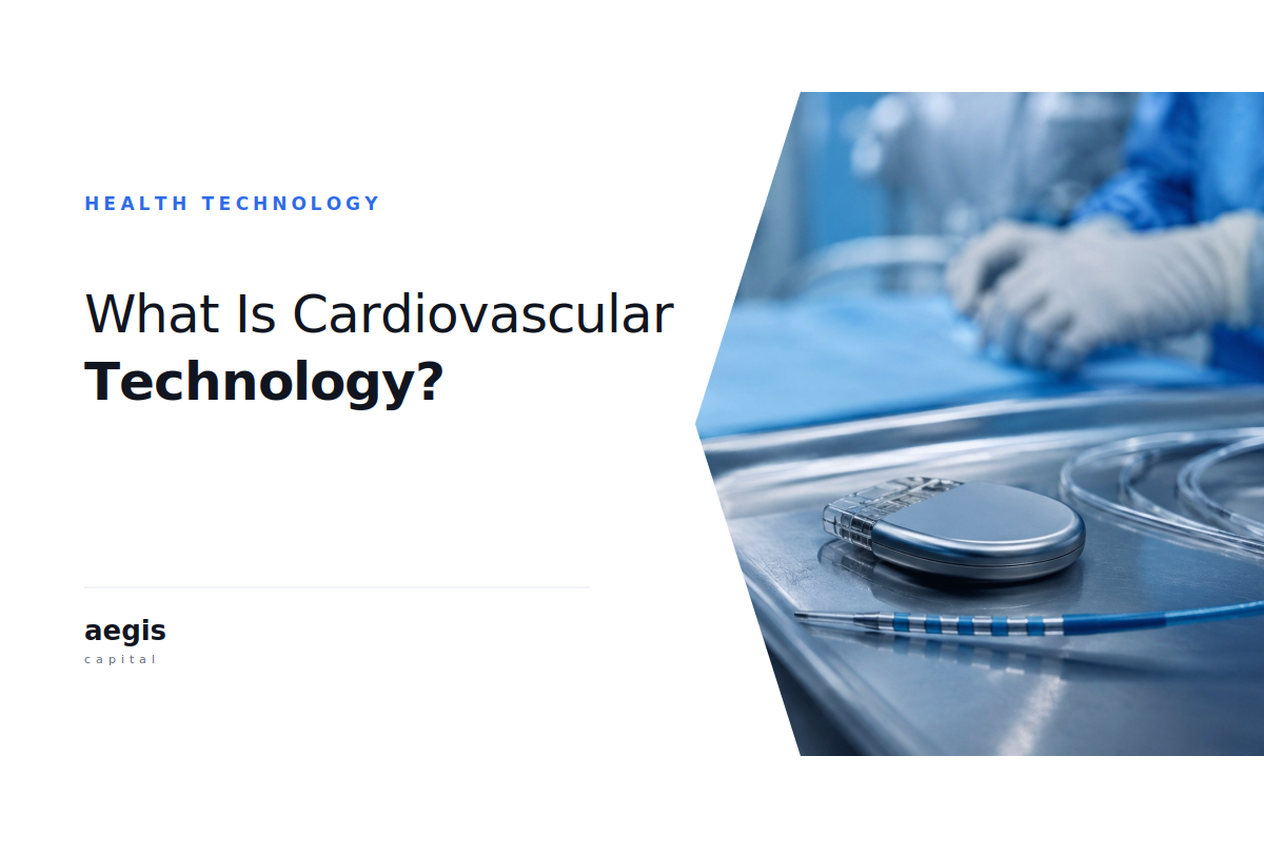
What Is Cardiovascular Technology? A Guide to the Devices Changing Heart Care
Cardiovascular technology is a specialised fusion of engineering and cardiology designed to improve patient outcomes.
- Implantable cardiac devices regulate abnormal rhythms and prevent sudden cardiac events.
- In-clinic diagnostic equipment provides precise imaging for accurate medical assessment.
- A wearable heart monitor lets patients track vital signs from home.
- Transcatheter systems repair structural heart disease without open-heart surgery.
- Venture capital funds finance medical startups to accelerate life-saving innovation.
What is cardiovascular technology?
Cardiovascular technology is a specialised field of medicine that uses advanced devices, diagnostic systems and implants to monitor, diagnose and treat diseases of the heart and circulatory system. The discipline merges clinical cardiology with precision engineering, giving doctors a way to address complex anatomical problems through cardiovascular devices rather than medication alone. Patients with conditions that drugs cannot fix increasingly depend on this engineered approach.
Innovation in the sector is reshaping patient care through highly accurate diagnostics and life-saving implants, with each new generation of tools cutting recovery times and improving long-term survival. Funds such as Aegis Capital invest in the medical startups developing these technologies. Financial backing shortens the path from laboratory prototype to certified equipment on the hospital floor.
The three main categories of cardiac devices
Cardiovascular devices fall into distinct functional groups defined by clinical purpose and where each one sits. Whether a person needs continuous internal intervention or simple daily tracking determines which of the 3 primary categories applies:
- Implantable life-saving devices manage dangerous arrhythmias from within the body.
- Diagnostic equipment captures high-resolution cardiovascular data inside medical facilities.
- Patient-worn wearables enable daily self-monitoring of vital signs outside the clinic.
Across the patient journey, all 3 categories work together to provide continuous oversight. A person might first notice an irregularity on a home monitor, undergo detailed assessment on hospital machines, and eventually receive a permanent internal regulator — sometimes within a few weeks.
Implantable cardiac devices that save lives
Cardiovascular implantable electronic devices (CIED) regulate or support an erratic heartbeat, and surgeons place these small units directly inside the chest. Severe electrical conduction problems leave some patients dependent on such implants to hold a normal pulse and avoid sudden cardiac arrest. Continuous internal monitoring is what makes that protection possible.
Did you know: modern CIEDs continuously monitor the heart's electrical signals 24 hours a day and automatically respond to life-threatening rhythm disorders, while miniaturisation improves patients' quality of life. Shrinking each unit makes the implant procedure less invasive, and smaller batteries let people return to everyday activity far sooner.
Pacemakers and their role in treating arrhythmia
Bradycardia — an abnormally slow heart rate — is the main reason a pacemaker is implanted. The unit sends small electrical impulses through leads attached to the cardiac muscle, forcing regular contractions so that blood keeps moving through the circulatory system. Steady pacing restores a reliable rhythm for patients whose own conduction has weakened.
Rate-responsive models adjust automatically to the body's changing oxygen demand during exertion, using sensors that detect movement or faster breathing and raise the pulse to match. Engineers design these units to prevent dangerous drops in heart rate below the normal range.
Implantable cardioverter-defibrillator (ICD)
An implantable cardioverter-defibrillator is a small electronic device placed under the skin of the chest to watch cardiac activity around the clock. Its sensors scan for life-threatening arrhythmias, above all sudden ventricular fibrillation. Once a lethal rhythm appears, the unit delivers a high-energy shock within seconds to restore a normal heartbeat.
The difference from a pacemaker comes down to therapeutic goal. A pacemaker corrects a consistently slow pulse with steady, low-voltage pacing, whereas an ICD interrupts a sudden, dangerous arrhythmia with a far stronger shock. Many patients at high risk of cardiac arrest receive an ICD precisely for that emergency capability.
Cardiac resynchronisation therapy (CRT) and implantable loop recorders (ILR)
Cardiac resynchronisation therapy is a form of biventricular pacing used in severe heart failure, sending timed signals to both lower chambers at once to improve pumping efficiency. Synchronised contractions ease the chronic fatigue and breathlessness that come with advanced cardiac decline. Better-coordinated beats can meaningfully raise a patient's daily capacity.
An implantable loop recorder takes the opposite role — diagnosis rather than therapy. Inserted just under the chest skin, the sensor tracks heart rhythm continuously for up to 3 years with no external charging, and its software logs abnormalities such as paroxysmal atrial fibrillation for later review.
Cardiovascular devices for structural heart and vascular disease
Cardiovascular devices for structural disease let specialists treat the heart during minimally invasive procedures, threading hardware through narrow blood vessels instead of opening the chest wall. Specialists most often deploy 3 solutions:
- Vascular stents keep coronary arteries open immediately after balloon angioplasty.
- Diagnostic catheters provide precise imaging from inside the vascular network.
- Transcatheter systems repair damaged valves without open-heart surgery.
Catheter-based tools sharply reduce the need for traumatic open surgery and the long recovery that follows. Many patients go home within days rather than spending weeks in intensive care, and hospitals favour these approaches to limit complications and lower overall cost.
Structural cardiology innovation and transcatheter repair
Transcatheter techniques now let teams treat structural heart disease without traditional open-heart surgery. Flexible catheters reach the affected chambers through a blood vessel — often the femoral vein for right-heart targets — carrying repair devices directly to the site. Less invasive routes give a realistic option to elderly patients who could not survive a major chest operation.
Example: Approxima, backed by Aegis Capital, develops a minimally invasive transcatheter system for tricuspid valve regurgitation based on right-ventricle remodeling. The approach enables physiological valve repair without open-heart surgery for high-risk patients. Solutions like this extend treatment to people once considered untreatable because of advanced age or co-morbidities.
TAVR and structural closure implants
Transcatheter aortic valve replacement (TAVR) treats severe aortic stenosis, most often in older patients. A fully functional artificial valve travels through a narrow catheter and is seated over the diseased one, restoring normal blood flow and relieving pressure inside the left ventricle without opening the chest.
Structural closure implants address a different danger — clots escaping into the circulation. The Watchman device seals the left atrial appendage, the small pocket where thrombi tend to form during atrial fibrillation, and closing it sharply lowers stroke risk for patients who cannot tolerate long-term blood thinners.
Mechanical circulatory support for the failing heart
Mechanical circulatory support is the most advanced tier of cardiac devices, reserved for end-stage heart failure. Intensive care units deploy external or implantable pumps to stabilise patients whose hearts can no longer maintain adequate pressure, and critical care teams lean on this hardware during acute emergencies.
Such machines take over or assist the pumping work of a failing heart once medication and lesser interventions stop being enough. Sustained organ perfusion buys time while the team assesses whether the patient is a candidate for transplant.
Ventricular assist devices (VAD/LVAD) and intra-aortic balloon pumps (IABP)
Ventricular assist devices manage advanced heart failure in severely compromised patients, serving either as a temporary bridge-to-transplant or as permanent destination therapy for those ineligible for a new organ. The pump draws blood continuously from the left ventricle and pushes it into the aorta.
An intra-aortic balloon pump offers immediate, short-term support in the ICU. Positioned inside the main artery, the balloon inflates during the heart's resting phase and deflates just before the next beat, easing the workload on a weakened cardiac muscle.
The wearable heart monitor and smartwatch accuracy
A wearable heart monitor now plays a growing part in home cardiac monitoring, and daily tracking catches transient arrhythmias that a brief appointment would miss. Current offerings fall into 3 categories:
- Certified telemedicine bands, such as SiDLY's, track vital signs for seniors.
- AI-supported ECG systems, such as those from SmartMedics, provide advanced remote monitoring.
- Consumer smartwatches act mainly as early-warning tools for possible atrial fibrillation.
Clinicians still treat the electrical reading from a dedicated chest strap or a clinical ECG as the gold standard. No wearable heart monitor on the market replaces that diagnostic-grade signal, since optical wrist sensors work as early-warning indicators only. Tip: a smartwatch alert such as a possible atrial fibrillation reading should always be confirmed with a clinical ECG.
Funding and scaling cardiovascular innovation
Breakthrough cardiac devices reach the market only through a mix of advanced research and substantial capital, and development cycles often run for years before a prototype reaches its first human trial. Venture capital funds such as Aegis Capital finance early-stage medtech startups, bridging the gap between laboratory concept and clinical reality.
Investor backing also helps technical founders navigate regulatory certification and global commercialisation. Building an innovation ecosystem accelerates the rollout of life-saving technologies. Aegis Capital manages a fund of PLN 80 million to support the next generation of medical engineering.
A career in cardiovascular technology
Beyond the hardware, cardiovascular technology is also a profession. The field bridges advanced technology with direct patient care, and it focuses on heart and blood vessel conditions across hospitals, clinics and physicians' offices. For students interested in the medical field without a decade in medical school, it offers a fast route into hands-on cardiac work.
As a discipline, cardiovascular technology covers three broad areas: invasive cardiology, echocardiography and vascular technology. Professionals known as cardiovascular technologists (CVTs), together with cardiovascular technicians, support cardiovascular teams by running and managing complex medical machinery. Cardiovascular disease remains the leading cause of mortality worldwide, which keeps steady demand for skilled people who can operate this equipment and points to a stable future for the field.
What a cardiovascular technologist does?
A cardiovascular technologist assists cardiologists and other physicians in diagnosing heart disease, working directly with patients in various healthcare settings. Daily responsibilities include preparing patients for tests, placing sensors and recording electrocardiograms that trace the electrical impulses from the heart. Technologists also assist physicians during complex procedures and monitor the patient at each stage.
Much of the invasive work happens in the cardiac cath lab. During cardiac catheterization, the technologist helps guide a catheter through the blood vessels to detect blockages, while electrophysiology procedures monitor the heart's electrical pathways during rhythm correction. CVTs contribute to the diagnosis throughout, recording the data that cardiologists rely on across the diagnostic process.
Cardiac sonographer, vascular sonographer and EKG technician roles
Cardiovascular technology splits into sub-specialties, and many professionals specialize in just one. A cardiac sonographer creates echocardiograms using ultrasound instrumentation, turning sound waves into moving images of the heart, while vascular sonographers — also called vascular technologists — assess blood flow through the arteries and veins using ultrasound procedures. Some focus on echocardiography, others on vascular sonography.
EKG technicians work on the heart's electrical activity rather than imaging. They perform electrocardiograms, fit patients for Holter monitoring that records heart activity for 24 hours or more, and run stress testing. Stress tests monitor the heart's performance during physical exertion, which can expose problems that stay hidden at rest. A cardiovascular technician often handles this EKG and monitoring side, while a technologist takes on invasive procedures in the lab.
Patient care and patient safety in clinical practice
Strong patient care sits at the centre of the job. Technologists prepare patients, explain what each test involves, and place electrodes on the patient's chest with care and accuracy. Clear communication matters as much as technical skill, since explaining a procedure calmly keeps a patient still and cooperative.
Patient safety runs through every part of clinical practice. Fluency in medical terminology lets technologists pass accurate information to the wider team, including nurses and physicians. The work also suits people who are physically active, as members of the team spend long shifts on their feet and often help position patients.
Education, certification and work experience
Entry into the medical field takes more than a high school diploma. Most cardiovascular technologists need an associate's degree, and many complete dedicated training programs that combine classroom study with clinical placements. These courses teach cardiac anatomy and physiology, the use of diagnostic equipment, and the medical terminology used on the ward.
Certification strengthens a candidate's standing, and many employers prefer or require it. Students usually obtain certification after finishing an accredited course and gaining supervised work experience, then continue professional development to keep their skills current. Understanding both the underlying physiology and the equipment is what separates a confident technologist from a beginner.
Pay and job outlook for cardiovascular technologists
Cardiovascular technology offers solid pay and steady professional growth. According to the U.S. Bureau of Labor Statistics, the median annual wage for cardiovascular technologists was $67,260 in 2024, with the range shifting by setting, certification and experience. Many technologists work full time, though part-time work is common across the occupation.
Job prospects stay stable as the population ages. Employment is projected to grow 3% from 2024 to 2034, and about 3,800 job openings are expected each year on average. Continued research, new robotic and minimally invasive tools, and the growth of digital health point to a profession that keeps evolving.
Frequently asked questions
Can you have an MRI scan with a pacemaker or ICD?
Many modern cardiac devices are labelled "MRI-conditional", which means a scan is possible under specific settings and supervision. Older implants may not be safe inside a scanner, so the cardiology team always checks the exact model and adjusts the device beforehand.
How long do implantable cardiac devices last?
Most pacemaker and ICD batteries run for 5–15 years, depending on the model and how often the device has to intervene. The leads usually stay in place, so a battery change is a smaller procedure than the original implant.
Do implantable cardiac devices need regular monitoring?
Yes. Each device is reviewed at scheduled check-ups, and many cardiovascular devices now transmit data remotely, letting the clinic catch battery wear or abnormal rhythms without an in-person visit.
How much do cardiovascular technologists make in the UK?
UK pay follows NHS Agenda for Change bands rather than a single national median, so it differs from the US figure. Cardiac physiologists and technologists generally start in the lower-to-mid bands and move up with experience and specialist registration, which means actual pay depends on role, region and seniority.
How many years does it take to become a cardiovascular technologist?
An associate's degree usually takes about 2 years, while a bachelor's route runs closer to 4. With certification and supervised work experience added on, most people reach a job-ready level within 2 to 4 years, depending on the path they pick.
How do you become a cardiovascular technologist in the UK?
The UK route runs mainly through the NHS, often via a healthcare science degree in cardiac physiology or an accredited apprenticeship, followed by registration with a professional body. Entry usually begins after relevant qualifications rather than a US-style associate's degree, so the exact steps differ from the North American model.
