
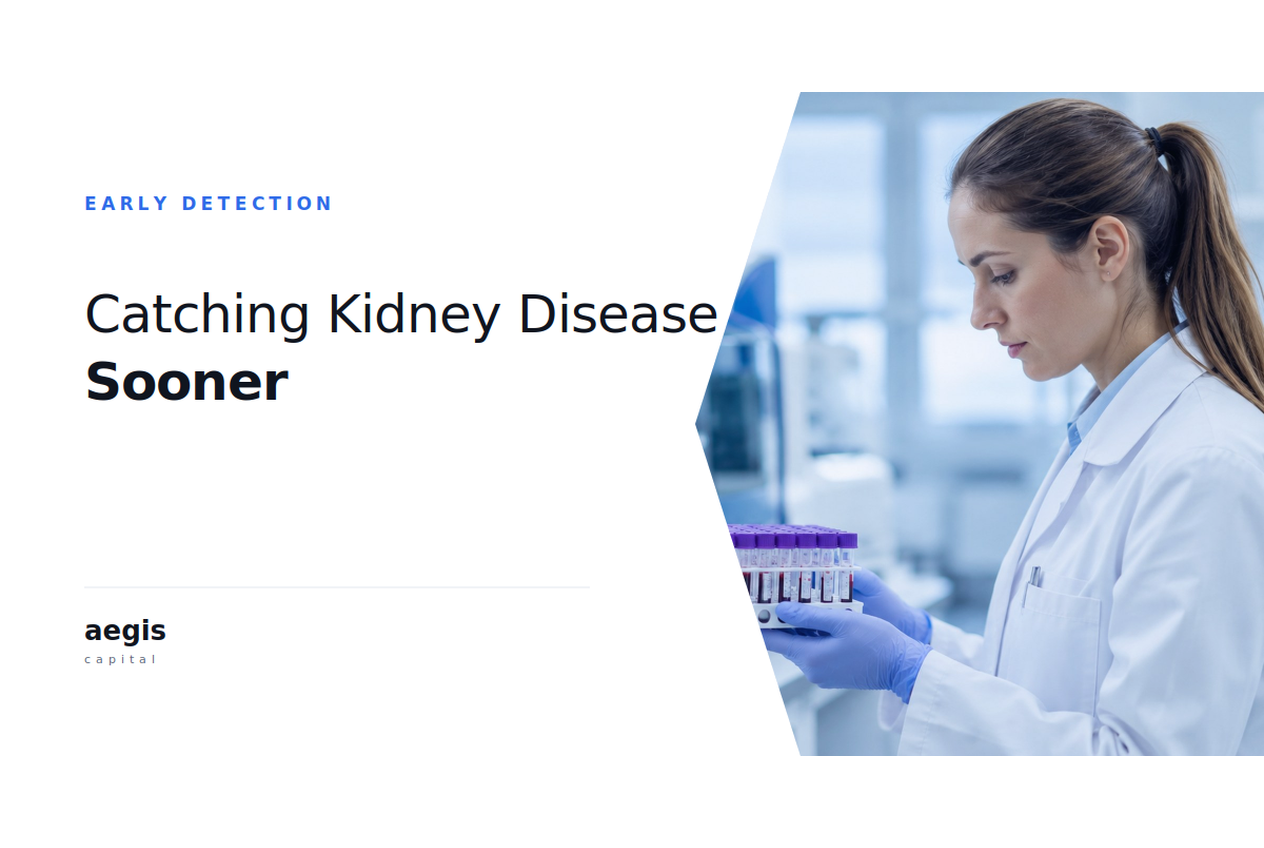
Early Detection of Disease: Why Catching Kidney Disease Sooner Matters
Readers at higher risk gain the most from this information — people with diabetes, high blood pressure, a family history of kidney failure, or older age, plus the caregivers supporting them. The sections below explain how to recognize the early signs of kidney disease, which blood and urine tests confirm it, the 5 stages of CKD, and how to protect kidney function. More than 1 in 7 US adults have CKD, and about 9 in 10 do not know it, according to the CDC.
- Chronic kidney disease (CKD) is diagnosed with 2 tests — an eGFR blood test and a uACR urine test.
- Kidneys can lose up to 90% of their function before symptoms appear, so CKD is called a silent disease.
- More than 1 in 7 US adults have CKD, and roughly 9 in 10 are unaware of it (CDC).
- Diabetes is the leading cause of kidney disease; high blood pressure is the second (NIDDK).
- The 5 CKD stages (G1–G5) are defined by eGFR; diagnosis in stages 1–3 gives the best chance to slow progression.
- Most CKD never reaches kidney failure — about 808,000 Americans need dialysis or a kidney transplant.
What is kidney disease?
Kidney disease is any condition that reduces the kidneys' ability to clean the blood, remove extra fluid, and keep the body's chemistry balanced. Healthy kidneys clean the blood around the clock, and the kidneys play several roles at once — they filter waste, control blood pressure, help make red blood cells, and support bone health by activating vitamin D. When the kidneys are damaged, waste and extra fluid build up, and these jobs start to fail.
Two patterns of damage exist. Acute kidney injury comes on within hours or days and can sometimes be reversed. Chronic kidney disease develops over months or years, lasts at least 3 months, and is usually permanent. Many different conditions affecting the kidneys — from diabetes to infections to inherited disorders — can trigger either pattern, and each leaves the kidneys filtering less blood than they should.
What is chronic kidney disease (CKD)?
Chronic kidney disease (CKD) is kidney damage or reduced kidney function that lasts at least 3 months. Doctors confirm CKD when the estimated glomerular filtration rate (eGFR) stays below 60 mL/min/1.73 m² for 3 months or more, or when tests show kidney damage such as protein in the urine over the same period. CKD is progressive and permanent, and it is divided into 5 stages by eGFR.
Chronic kidney disease basics start with the cause. Diabetes is the most common cause of kidney disease, and high blood pressure is the second, according to the NIDDK. Kidney disease also occurs with kidney inflammation (glomerulonephritis), inherited polycystic kidney disease, repeated infections, and blockages from kidney stones or an enlarged prostate. Excess body weight raises the risk further, and treating the underlying cause guides the treatment plan.
Damaged kidneys affect the whole body. CKD increases the risk of heart and blood vessel disease, stroke, anemia, and weak bones, the National Kidney Foundation reports. Because the kidneys touch so many systems, these other health problems can develop slowly and without symptoms, even while kidney function keeps declining.
Why does early detection of kidney disease matter?
Early detection of kidney disease matters because the kidneys can lose up to 90% of their function before symptoms appear, so damage is often advanced by the time a person feels unwell. The National Kidney Foundation describes kidney failure as the point where 85–90% of kidney function is already gone. Catching the decline early lets a care team slow it with medication, diet, and blood pressure control, before the loss becomes irreversible.
Most people with early CKD feel completely healthy. About 9 in 10 US adults with CKD do not know they have it, according to the CDC, because early-stage kidney disease rarely causes obvious symptoms. Blood and urine tests detect the problem long before it becomes dangerous, which is why screening high-risk groups and acting on an early diagnosis can prevent kidney failure.
What are the early signs of kidney disease?
The early signs of kidney disease are subtle and easy to miss, so many symptoms of kidney disease stay hidden until the condition is advanced. People often mistake the early signs for normal aging, stress, or poor sleep. The 10 warning signs below appear gradually, and several can have other causes — but in anyone at high risk, they justify a blood and urine test.
Watch for the following symptoms:
- Less energy, fatigue, or trouble concentrating
- Trouble sleeping
- Dry, itchy skin
- Frequent urination, especially at night
- Blood in the urine
- Foamy urine
- Puffiness around the eyes
- Swollen ankles and feet
- Poor appetite
- Muscle cramps
Each sign has a biological cause. Foamy urine reflects protein leaking through damaged filters; frequent urination at night points to a loss of the kidneys' concentrating ability; and blood in the urine means red blood cells are escaping into the urine and needs prompt testing. Puffiness around the eyes signals protein loss, while swollen ankles come from extra fluid the kidneys can no longer remove.
Later signs follow as waste builds up. Muscle cramps result from electrolyte imbalances, fatigue worsens as the kidneys make fewer red blood cells, and poor appetite and a metallic taste appear when waste accumulates in the blood. Recognizing these signs of kidney trouble early helps you raise them with a healthcare professional before the disease advances.
Why does kidney disease cause itchy skin?
Itchy skin in kidney disease, known as uremic pruritus, develops when failing kidneys let waste products and minerals build up in the blood. High phosphorus and an imbalance of calcium and other minerals are linked to the itch, and reduced filtering leaves the skin dry and flaky. Itchy skin tends to appear in the later stages, often alongside dry patches and a dull surface.
Dry, itchy skin can also signal mineral and bone disease, a common CKD complication. When the kidneys cannot balance calcium, phosphorus, and vitamin D, both skin and bone health suffer. Treating the mineral imbalance does more than moisturizing alone, so persistent itch is worth reporting to a doctor rather than managing with lotion.
Early stage kidney disease: what happens in the early stages (1 to 3)?
Early stage kidney disease covers stages 1 to 3, when the kidneys still work fairly well and most people have no symptoms. In the early stages, eGFR ranges from 90 or above (stage 1, with signs of damage) down to 30–59 (stage 3). Damage in these early stages is usually permanent, but the right treatment plan can slow further loss of kidney function and protect what remains.
Action in the early stages changes the outcome. Controlling blood pressure and blood sugar, eating less salt, and avoiding pain relievers that strain the kidneys can slow the disease before it reaches kidney failure. Stage 3 is often the first point where a blood test alone confirms CKD, so regular tests matter for anyone at risk of developing kidney disease.
How chronic kidney disease progresses through its stages
Chronic kidney disease progresses through 5 stages set by eGFR, moving from mild, silent damage to kidney failure. As kidney disease progresses, eGFR falls, waste builds up, and complications such as anemia, high blood pressure, and bone disease become more likely. Progression speed varies — controlling diabetes and blood pressure can slow it for years, while uncontrolled disease can reach the later stages faster.
The stages are graded by eGFR:
- G1 — eGFR 90 or above, with signs of kidney damage
- G2 — eGFR 60–89, mild loss of kidney function
- G3 — eGFR 30–59, moderate loss (split into 3a, 45–59, and 3b, 30–44)
- G4 — eGFR 15–29, severe loss, and the stage often called advanced kidney disease
- G5 — eGFR below 15, kidney failure
Complications cluster in the later stages. Stage 3 onward can bring anemia, mineral and bone disease, and rising blood pressure, the National Kidney Foundation notes. Stage 4 is advanced kidney disease, the point to start preparing for treatment options such as dialysis or a transplant, so that decisions are not rushed once kidney failure arrives.
How is chronic kidney disease diagnosed with blood and urine tests?
Chronic kidney disease is diagnosed with 2 tests — a blood test that measures filtering capacity and a urine test that checks for protein. The blood test reports the estimated glomerular filtration rate (eGFR), and the urine test reports the albumin-to-creatinine ratio (uACR). Neither test alone is enough, because a person can have a near-normal eGFR while already leaking albumin into the urine.
What is the eGFR blood test?
The eGFR blood test estimates the glomerular filtration rate from serum creatinine and is the main measure of how well the kidneys filter blood. A normal eGFR is about 90 or higher. An eGFR below 60 that lasts at least 3 months indicates chronic kidney disease. Blood urea nitrogen (BUN) and electrolytes add detail on how well the kidneys clear waste and balance the blood.
What is the uACR urine test?
The urine albumin-to-creatinine ratio (uACR or ACR) is the most sensitive test for early kidney damage. The uACR detects microscopic protein leaks long before eGFR drops, regardless of the underlying cause. A standard urinalysis often gives the first clue during a routine exam. The test matters most for people with diabetes, whose high blood sugar attacks the small filtering vessels inside the kidneys.
When are a kidney biopsy and imaging used?
A kidney biopsy and imaging add information when a blood or urine test is not conclusive. Ultrasound checks kidney size and structure. A kidney biopsy removes a tiny tissue sample to identify the type and cause of damage, which guides the treatment plan. Both are used selectively for diagnosis, not for routine screening of people who feel well.
What is a normal eGFR by age?
A normal eGFR is about 90 or higher in healthy adults, and it declines slowly with age. The filtration rate peaks at roughly 120 mL/min in the third decade of life, then falls by about 1 mL/min each year, reaching around 70 mL/min by age 70. A natural, age-related fall differs from a rapid, disease-driven drop.
Lab reports use several acronyms, and a plain-language key helps. Serum creatinine measures muscle waste in the blood; the eGFR converts that into a filtration score; the uACR looks for protein in the urine; and BUN tracks urea nitrogen. A rapid decline in eGFR needs prompt investigation, while a small, steady fall with age is usually normal.
What is kidney failure?
Kidney failure is the most severe stage of chronic kidney disease, reached when eGFR falls below 15 mL/min — stage 5. At that point, 85–90% of kidney function is gone and the kidneys can no longer keep the body healthy on their own, the National Kidney Foundation states. Waste, extra fluid, and acids build up in the blood, and treatment becomes necessary to stay alive.
Kidney failure can arrive after years of silent decline or, less often, more suddenly. Symptoms at this stage are usually clear — heavy swelling, severe fatigue, nausea, and a sharp drop in urine output. Because the damage is permanent, care shifts from slowing the disease to replacing the work the kidneys can no longer do.
What is end stage kidney failure?
End stage kidney failure, also called end-stage kidney disease (ESKD), is kidney failure that needs dialysis or a transplant to sustain life. Of the 35.5 million US adults with chronic kidney disease, about 808,000 have reached end-stage disease — roughly 1 in 44, according to the CDC and American Kidney Fund. Among them, about 68% receive dialysis and 32% have a kidney transplant.
Most chronic kidney disease never reaches this stage, which is the central case for early detection. People diagnosed and treated in the early stages often keep enough kidney function to avoid dialysis for life. Reaching end stage kidney failure usually reflects disease that went undetected or uncontrolled for years.
When is dialysis or a kidney transplant needed?
Dialysis or a kidney transplant becomes necessary at stage 5, when eGFR drops below 15 and the kidneys can no longer clear enough waste. Dialysis filters the blood by machine or through the lining of the abdomen. A kidney transplant replaces the failed kidney with a healthy donor kidney and is generally the preferred option for eligible patients, since it carries a lower death rate than long-term dialysis (74.3 versus 187.7 deaths per 1,000 person-years, NIDDK).
Treatment options depend on the person. Some patients are not candidates for a kidney transplant and stay on dialysis; others choose conservative care without dialysis. A nephrologist — a kidney doctor — builds the treatment plan, weighing age, other medical conditions, and personal goals, so that the choice fits the patient rather than the disease alone.
Who is at risk of developing kidney disease?
The highest risk of developing kidney disease falls on people with diabetes, high blood pressure, or a family history of kidney failure. Diabetes is the leading cause and high blood pressure is the second, the NIDDK reports. Other risk factors include older age, existing heart or cardiovascular disease, obesity, and an enlarged prostate that blocks urine flow. Many people in these groups feel healthy yet already have kidney damage.
The main high-risk groups are:
- Diabetes and high blood sugar
- High blood pressure
- A family history of kidney failure
- Older age
- Heart disease or cardiovascular disease
- Obesity and high body weight
- An enlarged prostate or another cause of urine blockage
Risk rises with each added factor. Diabetes and high blood pressure damage the nephrons and the small blood vessels inside the kidneys over time. These underlying conditions put people at increased risk, so anyone with one or more of them should be screened even while they feel well — the early stages rarely show red flags.
How can you protect your kidney health?
You protect your kidney health by controlling the conditions that damage the kidneys and avoiding substances that strain them. Keep blood pressure and blood sugar in target range, maintain a healthy weight, eat less salt, and check your blood pressure regularly. Limiting alcohol intake, not smoking, and avoiding overuse of pain relievers all help slow the loss of kidney function.
Practical steps include:
- Manage blood pressure and check your blood pressure regularly
- Keep blood sugar in range if you have diabetes
- Maintain a healthy weight, keeping body weight in a healthy range
- Reduce salt, and follow a lower-protein diet if your doctor advises it
- Limit pain relievers — nonsteroidal anti-inflammatory drugs (NSAIDs) — and avoid unproven herbal medicines
- Limit alcohol intake, stop smoking, and stay active
- Get regular tests if you are at high risk
Slowing progression is the goal, not a cure. Chronic kidney disease damage is usually permanent, so the treatment plan focuses on protecting the kidney function that remains. Certain medications and certain medicines, including some antibiotics and NSAIDs, can harm the kidneys, so check with a healthcare professional before long-term use. Treating the underlying cause — most often diabetes or high blood pressure — does more for long-term kidney health than any single supplement.
When should you see a doctor about kidney symptoms?
See a doctor about kidney symptoms if you have persistent or worrying symptoms — ongoing swelling, foamy or bloody urine, severe fatigue, or a sharp change in how often you urinate. People with diabetes, high blood pressure, or a family history of kidney problems should ask for regular blood and urine tests even without symptoms. A healthcare professional can confirm the cause and start treatment early.
A kidney doctor, or nephrologist, handles complex or advanced cases. Ask which CKD stage you are in, how often to retest, and your exact blood pressure and diet targets. Early questions and regular tests protect the nephrons you still have and keep small problems from becoming kidney failure.
Frequently asked questions
What is stage 1 kidney disease?
Stage 1 kidney disease means the kidneys still filter normally — eGFR is 90 or above — but other tests show kidney damage, such as protein in the urine, for at least 3 months. Stage 1 usually causes no symptoms and is often found by chance during a blood or urine test. Controlling blood pressure and blood sugar at this point gives the best chance to keep kidney function stable.
How can you tell if your kidneys are healthy?
You cannot tell if your kidneys are healthy from how you feel, because early kidney disease has no symptoms. Two simple tests give the answer — an eGFR blood test of filtering capacity and a uACR urine test for protein. A normal eGFR is about 90 or higher with no protein in the urine. People at high risk should add a blood pressure check, since high blood pressure both causes and signals kidney problems.
How can you reduce chronic kidney disease naturally?
You can slow chronic kidney disease with lifestyle changes, though existing kidney damage is usually permanent and cannot be reversed. Keep blood pressure and blood sugar in range, cut salt, reach a healthy weight, stay active, and limit alcohol intake. Avoid overusing pain relievers and unproven herbal medicines, which strain the kidneys. These steps protect remaining kidney function and slow progression toward kidney failure.
What habits damage the kidneys?
Several everyday habits damage the kidneys over time. Regular overuse of pain relievers — nonsteroidal anti-inflammatory drugs (NSAIDs) — is a leading culprit. A high-salt diet and uncontrolled high blood pressure injure the small blood vessels inside the kidneys. Heavy alcohol intake, smoking, chronic dehydration, excess body weight, and some herbal medicines and supplements add further strain. Cutting these habits lowers the risk of developing kidney disease.
Why is chronic kidney disease (CKD) a Longevity investment priority?
Chronic kidney disease (CKD) is a Longevity investment priority because it is common, costly, and largely undiagnosed — a gap that earlier detection can close. More than 1 in 7 US adults have CKD, and about 9 in 10 do not know it, according to the CDC. Aegis Capital, a HealthTech & Longevity VC, targets exactly this kind of silent, scalable health problem.
Demographics make the problem grow. CKD prevalence rises sharply with age, so aging populations across Europe and the US mean more patients each year. Finding disease before symptoms — the core idea of the Longevity sector — extends healthy years and reduces the need for late, expensive treatment such as dialysis or a kidney transplant.
How do AI and diagnostics spot the early signs of kidney problems?
AI and diagnostic tools spot the early signs of kidney problems by reading blood and urine results, imaging, and risk data faster than routine care often does. Algorithms can flag a falling eGFR or rising protein in the urine and prompt testing before symptoms start. Aegis Capital backs AI and Digital Health and Diagnostics as named focus areas, where earlier detection drives the most value.
Early flags change what treatment can achieve. Catching kidney damage in stages 1 to 3 lets clinicians slow the disease with blood pressure and blood sugar control, rather than managing kidney failure later. Tools that fold these checks into normal workflows turn scattered lab values into an early diagnosis a patient can act on.
Why does catching disease in the early stages lower healthcare costs?
Catching disease in the early stages lowers healthcare costs because late-stage treatment is far more expensive than prevention. Care for dialysis and transplant patients accounts for over 7% of all Medicare spending, even though they are fewer than 1% of people on Medicare, according to Healthy People 2030. Earlier detection keeps more patients out of that costly final stage.
Prevention is where Aegis Capital concentrates. A HealthTech & Longevity VC, the fund backs early-stage startups whose tools detect disease sooner and slow progression — across many conditions, not kidney disease alone. Shifting spending from late treatment toward early diagnosis is the economic case that makes early detection attractive to health systems and investors alike.
How do HealthTech and VC funds support earlier diagnosis of kidney disease?
HealthTech companies and venture capital funds support earlier diagnosis by backing AI, digital health, and diagnostic tools that detect disease before symptoms appear. Aegis Capital, a HealthTech & Longevity VC, invests in early-stage startups building this kind of technology across many conditions. Earlier detection and prevention sit at the core of the Longevity sector, where finding disease sooner improves outcomes and lowers cost.
Support from Aegis Capital goes beyond capital. Portfolio companies receive an initial investment of up to PLN 3 million, with total funding reaching up to PLN 8 million per company, plus access to a network of clinicians, investors, and industry partners. For chronic kidney disease, where about 9 in 10 patients do not know they are ill, earlier and more affordable detection is exactly the kind of advance the sector aims to fund.
